Custom Software Development for Businesses in Egypt

Custom Software Development for Businesses in Egypt
Custom development becomes justified when adapting an off-the-shelf product costs more than building, or when the process itself is your competitive advantage.
In short: Custom development becomes justified when adapting an off-the-shelf product costs more than building, or when the process itself is your competitive advantage. Otherwise, a ready product is faster, cheaper and lower risk.
What is Custom Software Development for Businesses?
Custom development builds a system around a specific company's operations instead of bending the company to a ready product. It is justified by proprietary business logic, integrations standard systems do not support, or a scale where subscriptions exceed build cost.
Why Custom Software Development for Businesses is worth the investment in Egypt
- Automating repeated work: Custom systems remove the duplicate data entry between departments that is the single biggest source of error in companies running operations on spreadsheets.
- Integrating with what you already run: An off-the-shelf product imposes its own workflow; a custom system connects to the accounting, inventory and payment tools you actually use.
- Owning the code and the data: You hold the source and the database, so you are not exposed to subscription increases and you do not lose your data when you change vendors.
- Scaling with growth: You add the modules you need when you need them, rather than paying upfront for a suite you use 20% of.
Who needs Custom Software Development for Businesses?
- Companies whose operations do not fit ready products
- Companies needing integrations standard systems do not support
- Companies at a scale where subscriptions cost more than building
Core capabilities
- Built around your operations: The system follows how you work instead of you reorganising around a product designed for another market.
- Code and data ownership: No escalating subscriptions and no data loss when changing vendors; the system is an asset you own rather than a service you rent.
- Scaling as needed: Adding modules when you need them rather than paying upfront for a suite you use a fraction of.
Technologies and tools
These are the tools we actually use on Custom Software Development for Businesses projects. Which ones apply depends on the size and budget of the project, not on what is newest:
- Node.js
- Python
- Laravel
- .NET
- PostgreSQL
- MySQL
- Redis
- Docker
- REST/GraphQL APIs
Cost and timeline in Egypt
| Tier | Scope | Indicative cost (EGP) | Duration |
|---|---|---|---|
| Starter | Limited scope, core functionality | 60,000 - 150,000 | from 6 weeks |
| Standard | Full scope with integrations | 150,000 - 500,000 | 6-24 weeks |
| Advanced | Enterprise scope, complex integrations | 500,000+ | 24+ weeks |
These are indicative 2026 ranges for the Egypt market, not a quotation. Actual cost is set after a scoping session, and the largest driver is usually the number of external integrations rather than the number of screens.
How a Custom Software Development for Businesses project runs
1. Process analysis and requirements
Sessions with process owners to document current workflow and locate bottlenecks, ending in a signed-off requirements document and prototypes.
2. Data model and architecture design
Schema, relationships and API contracts are designed before any code is written, because restructuring after launch costs ten times more.
3. Incremental development
The system is built in short cycles, each producing a usable, reviewable module, rather than one delivery at the end.
4. Testing and data migration
Unit, integration and acceptance tests, then migration of historical data from the old system with a reconciliation report.
5. Launch and parallel running
The new system runs alongside the old one for a period, with user training and performance monitoring before the old one is retired.
Best practices
- Ship the smallest working version first: Release the module that solves the biggest operational pain, gather user feedback, then build the rest.
- Automated tests around financial logic: Any code computing prices, tax or balances must be test-covered — one error there shows up on every invoice.
- Separate business logic from the interface: It turns adding a mobile app or an external integration later into days of work instead of a rewrite.
- Document the API from day one: OpenAPI documentation lets a new developer or an integration partner work without a verbal handover.
- Plan backup and restore: An untested backup is not a backup; actually rehearse a restore every quarter.
Common mistakes to avoid
- Building every module before launching any: Months later you discover half of what you built goes unused. Release incrementally.
- Leaving data migration until the end: Legacy data is always messier than expected; start cleaning it in the first phase.
- No single owner on the client side: Without one person who can decide, reviews turn into conflicting opinions and phases slip.
- Depending on one developer who knows everything: Their absence stops the project; require documentation and second-party code review.
- Ignoring performance until data grows: A query that is fine on a thousand rows can stall at a million; test with realistic data volume.
What is specific to Egypt
The Egyptian market combines a large population with a deep developer base, which keeps delivery cost relatively lower than the Gulf at comparable technical quality. Against that, exchange rate volatility makes pricing in local currency and contracting in shorter phases safer for both sides.
- Connection quality varies by area, so systems that stop when the network drops need a local operating mode that syncs later.
- The e-invoice and e-receipt system is mandatory for registered companies and requires direct integration with the Tax Authority platform.
- VAT is 14% and needs correct handling inside any invoicing or point-of-sale system.
- Local payment gateways such as Fawry, Paymob and Meeza reach a wide segment that international bank cards do not.
Frequently asked questions
Q: When should I choose custom over ready?
A: When the process itself is your competitive advantage, or when the ready product needs modifications costing more than building. Otherwise ready is faster, cheaper and lower risk.
Q: How long does building take?
A: Two months for a limited-scope system to six months or more for a complete one. Incremental building is better: release the most important module first and use it before building the rest.
Q: What is the biggest risk?
A: Building what goes unused. What wastes most custom development budget is modules built because someone asked and then never used. Incremental release exposes that early.
Q: How is progress tracked during the project?
A: A weekly report of what was completed and what is next, plus a browsable build at the end of each phase rather than waiting for final delivery.
Q: Do you sign an NDA?
A: Yes. We sign a non-disclosure agreement before receiving any data or documents; it is standard on every project.
Q: What are the payment terms?
A: A 30% deposit at contract, with the balance tied to phase delivery rather than to dates, so you never pay for a phase that has not been delivered.
Conclusion
Custom Software Development for Businesses is less a purely technical decision than an operational one: the difference between a project that lands and one that stalls usually shows up in how clearly the scope was defined before starting, not in the choice of technology. Begin by stating precisely which problem you are solving, then ask any prospective partner how they intend to measure success.
Codlex Tech is a software development company working since 2020 with clients across Saudi Arabia, Egypt and the Middle East on websites, mobile apps, e-commerce, ERP and CRM systems.
Contact: [info.codlextech@gmail.com](mailto:info.codlextech@gmail.com) — [+201223280094](tel:+201223280094) — [codlextech.com](https://www.codlextech.com)
Latest Articles

Best Software Companies in Saudi Arabia: A Complete Guide 2026
Choosing a software company is settled by two questions rather than a portfolio: what do I receive at handover, and who could continue the work after you? A company…

Software Development Cost in Saudi Arabia
Software cost follows integration count and business logic complexity, not screen count. A ten-screen system connecting to e-invoicing, inventory and payment costs…

POS System Development
A POS is judged by entry speed at peak and by whether it works offline. A purely cloud system that stops when the network drops stops sales, which no real point of…

Cloud Solutions in Saudi Arabia
Cloud in Saudi Arabia carries an extra consideration: some sectors require data to remain inside the Kingdom.

HR System Development
An HR system starts with attendance and leave because they are the most repetitive and most disputed.

School Management System Development
A school management system is measured by whether parents actually use it: a system parents do not open pushes the school back to paper notes and phone calls.

Healthcare Software in Saudi Arabia
Healthcare software operates under a constraint others do not have: patient data is legally sensitive, and encryption and audit logging are not additional features…

Real Estate Software in Saudi Arabia
Property software differs from generic systems in managing unique inventory: every unit is different and does not repeat.

Restaurant Management System
A restaurant management system turns wastage from a vague month-end number into an explainable figure.
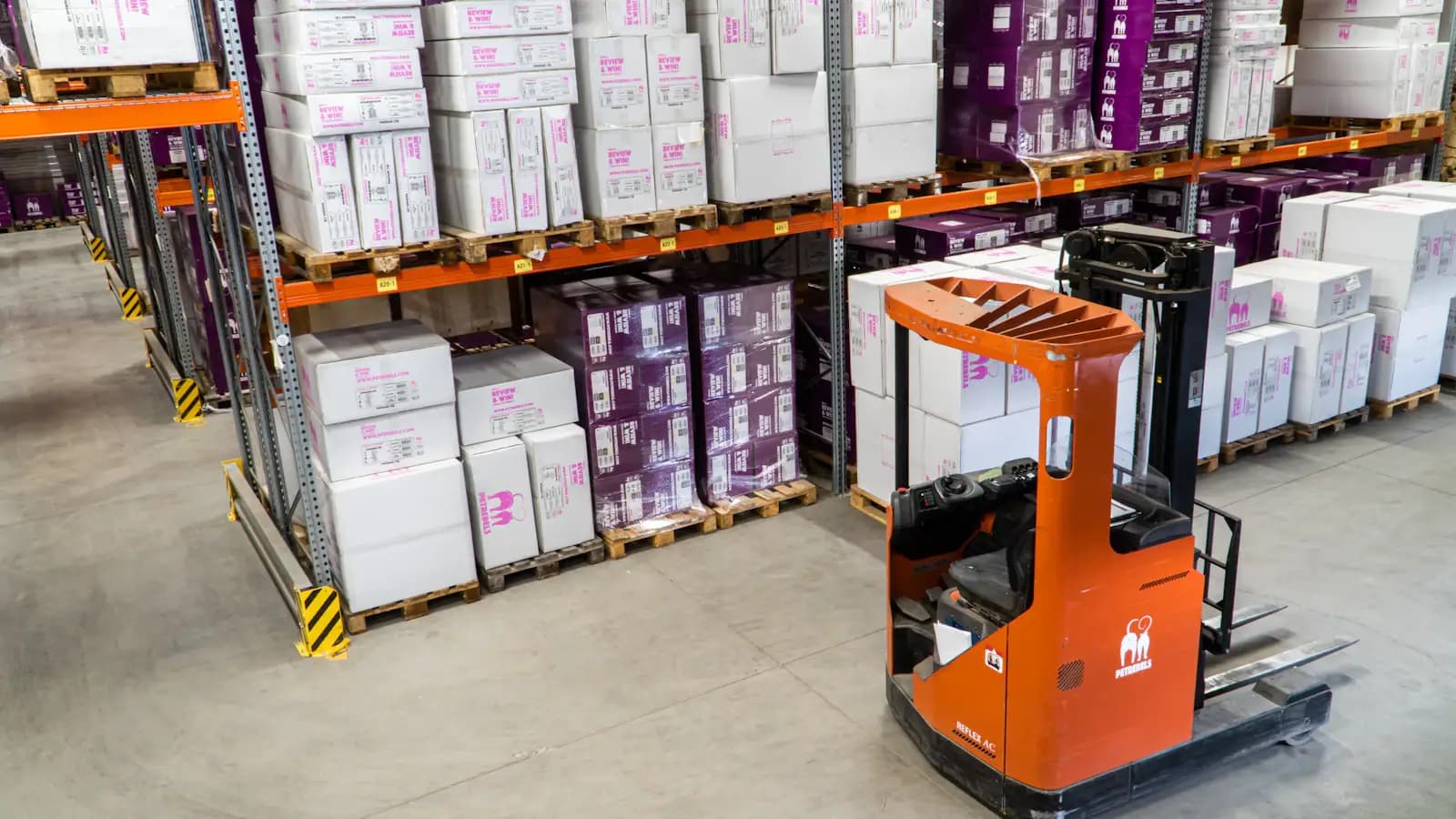
Logistics Software in Saudi Arabia
Logistics software is judged by its effect on cost per shipment rather than its feature count.

Blockchain Development in Saudi Arabia
Blockchain solves one specific problem: needing an unalterable record shared between parties who do not trust each other.

AI and Machine Learning in Saudi Arabia
Corporate AI projects succeed when they start from one repeated task with a clear success metric.