AI Solutions in Egypt: Guide 2026

AI Solutions in Egypt: Guide 2026
The most successful corporate AI projects start from one repeated task with a clear success metric, not from a general decision to adopt AI.
In short: The most successful corporate AI projects start from one repeated task with a clear success metric, not from a general decision to adopt AI. Projects that begin with the phrase 'we want AI' usually end with no operational effect.
What is AI Solutions?
AI solutions in a business context mean using models for specific tasks: classifying messages, extracting data from documents, answering repeat questions, or recommending. What separates a successful project from a failed one is defining the task, not choosing the model.
Why AI Solutions is worth the investment in Egypt
- Language processing at scale: Classifying thousands of messages or extracting data from documents is what models do better and cheaper than people.
- Instant answers around the clock: An assistant handles repeat questions outside business hours and routes complex cases to a person.
- Extracting data from documents: Reading invoices and contracts into structured fields removes hours of manual entry.
- Behaviour-based recommendations: Suggesting the right product or content raises average order value without increasing traffic.
Who needs AI Solutions?
- Companies processing a high volume of messages or documents manually
- Companies receiving the same questions hundreds of times a month
- Companies holding sufficient historical data but extracting no patterns from it
Core capabilities
- Document data extraction: Reading invoices and contracts into structured fields — the clearest case of immediate return.
- Message classification and routing: Sorting incoming enquiries and routing them to the right department automatically instead of manual triage.
- Answers grounded in your documents: Retrieval augmentation bases answers on your own material, which reduces hallucination and makes them checkable.
- Behaviour-based recommendations: Suggesting the right product or content to raise average order value without increasing traffic.
Technologies and tools
These are the tools we actually use on AI Solutions projects. Which ones apply depends on the size and budget of the project, not on what is newest:
- Claude API
- OpenAI API
- Python
- LangChain
- Vector databases
- RAG
- TensorFlow
- PyTorch
Cost and timeline in Egypt
| Tier | Scope | Indicative cost (EGP) | Duration |
|---|---|---|---|
| Starter | Limited scope, core functionality | 70,000 - 170,000 | from 6 weeks |
| Standard | Full scope with integrations | 170,000 - 500,000 | 6-20 weeks |
| Advanced | Enterprise scope, complex integrations | 500,000+ | 20+ weeks |
These are indicative 2026 ranges for the Egypt market, not a quotation. Actual cost is set after a scoping session, and the largest driver is usually the number of external integrations rather than the number of screens.
How a AI Solutions project runs
1. Picking a measurable use case
Choosing a task with a clear success metric and high frequency, rather than a general AI programme.
2. Preparing the data
Collecting and cleaning the data the model will rely on — usually the stage that consumes most of the time.
3. Choosing the approach
Weighing an off-the-shelf model via API, retrieval-augmented generation, or custom training.
4. Build and evaluate
Measuring accuracy on a held-out sample and comparing against current human performance as the baseline.
5. Integration and monitoring
Wiring the model into the real workflow and tracking errors and refusals after go-live.
Best practices
- Start with one narrow task: A specific task with a verifiable result is far easier to prove than an assistant that does everything.
- Ground answers in your own sources: Retrieval from your documents reduces hallucination and makes the answer checkable.
- Keep human review on sensitive output: Anything touching money or contracts passes a person before it executes.
- Measure against a baseline: Without knowing current performance you cannot claim the model is an improvement.
- Protect sensitive data: Decide what may be sent to external models and what must stay inside your own infrastructure.
Common mistakes to avoid
- Adopting the technology in search of a problem: A project that begins with 'we want AI' usually ends with no operational effect.
- Ignoring data quality: A model trained on messy data produces messy results with high confidence.
- Trusting output without verification: Models give confident wrong answers; verification is part of the design.
- Underestimating running cost: Inference costs accumulate quickly at scale and need estimating in advance.
- Not explaining the limits to users: An assistant implying capabilities it lacks loses user trust after the first mistake.
What is specific to Egypt
The Egyptian market combines a large population with a deep developer base, which keeps delivery cost relatively lower than the Gulf at comparable technical quality. Against that, exchange rate volatility makes pricing in local currency and contracting in shorter phases safer for both sides.
- Cash on delivery remains the most used option in e-commerce and must be supported with clear cash handling in the system.
- Addressing is irregular in many areas, so relying on coordinates and nearby landmarks matters more than the text address field in any delivery system.
- Exchange rate volatility makes pricing in pounds and contracting in short phases safer for both sides than long fixed-price contracts.
- The local developer base is broad, which keeps delivery cost relatively lower but demands finer discrimination between providers given the quality spread.
Frequently asked questions
Q: How do I know a task suits AI?
A: Three conditions: it recurs often, its output can be verified, and historical data about it exists. If any is missing, conventional automation or process improvement is usually more effective and cheaper.
Q: Is my data safe with external models?
A: It depends what you send and how. Sensitive data is identified and withheld, enterprise APIs that do not train on inputs are used, and anything that must not leave your estate is handled by models running inside your infrastructure.
Q: What are the monthly running costs?
A: They depend on usage volume, not project size. Inference costs accumulate as you scale, which is why we estimate them against realistic volume before building rather than after, and size the model to what the task actually needs.
Q: How do you estimate project duration?
A: After a scoping session establishing requirements and integrations. Estimating before scope is a guess, and any number given on a first call is either padded heavily or will be revised.
Q: What if I am not satisfied with the design?
A: Design goes through agreed revision rounds before development. Changing a design in its own phase takes hours; changing it after development takes days, which is why we settle it early.
Q: Do you host the project or do I?
A: Either. We usually recommend cloud hosting in the client company's name, managed under the maintenance contract, so ownership stays with you and operation with us.
Conclusion
AI Solutions is less a purely technical decision than an operational one: the difference between a project that lands and one that stalls usually shows up in how clearly the scope was defined before starting, not in the choice of technology. Begin by stating precisely which problem you are solving, then ask any prospective partner how they intend to measure success.
Codlex Tech is a software development company working since 2020 with clients across Saudi Arabia, Egypt and the Middle East on websites, mobile apps, e-commerce, ERP and CRM systems.
Contact: [info.codlextech@gmail.com](mailto:info.codlextech@gmail.com) — [+201223280094](tel:+201223280094) — [codlextech.com](https://www.codlextech.com)
Latest Articles

Chatbot Development in Egypt
A successful chatbot does not try to answer everything: it covers repeat questions accurately and hands the rest to a person smoothly.

Machine Learning Services in Egypt: Practical Applications
Machine learning needs sufficient, clean historical data before anything else, and that stage usually consumes most of the project.

Computer Vision Solutions in Egypt
Computer vision solves problems that data entry cannot: counting products on a shelf, inspecting quality on a production line, or reading a vehicle plate.

Best Software Companies in Saudi Arabia: A Complete Guide 2026
Choosing a software company is settled by two questions rather than a portfolio: what do I receive at handover, and who could continue the work after you? A company…

Web Development Company in Saudi Arabia: How to Choose the Best
A web development company is judged by what it hands over after launch: source code, deployment documentation, and whether another developer could continue the work.

Mobile App Development Company in Saudi Arabia
An app development company is judged by what happens after launch, not by the launch: who publishes updates, who owns the store accounts, who handles crashes.
SEO Company in Saudi Arabia: Boost Your Online Presence
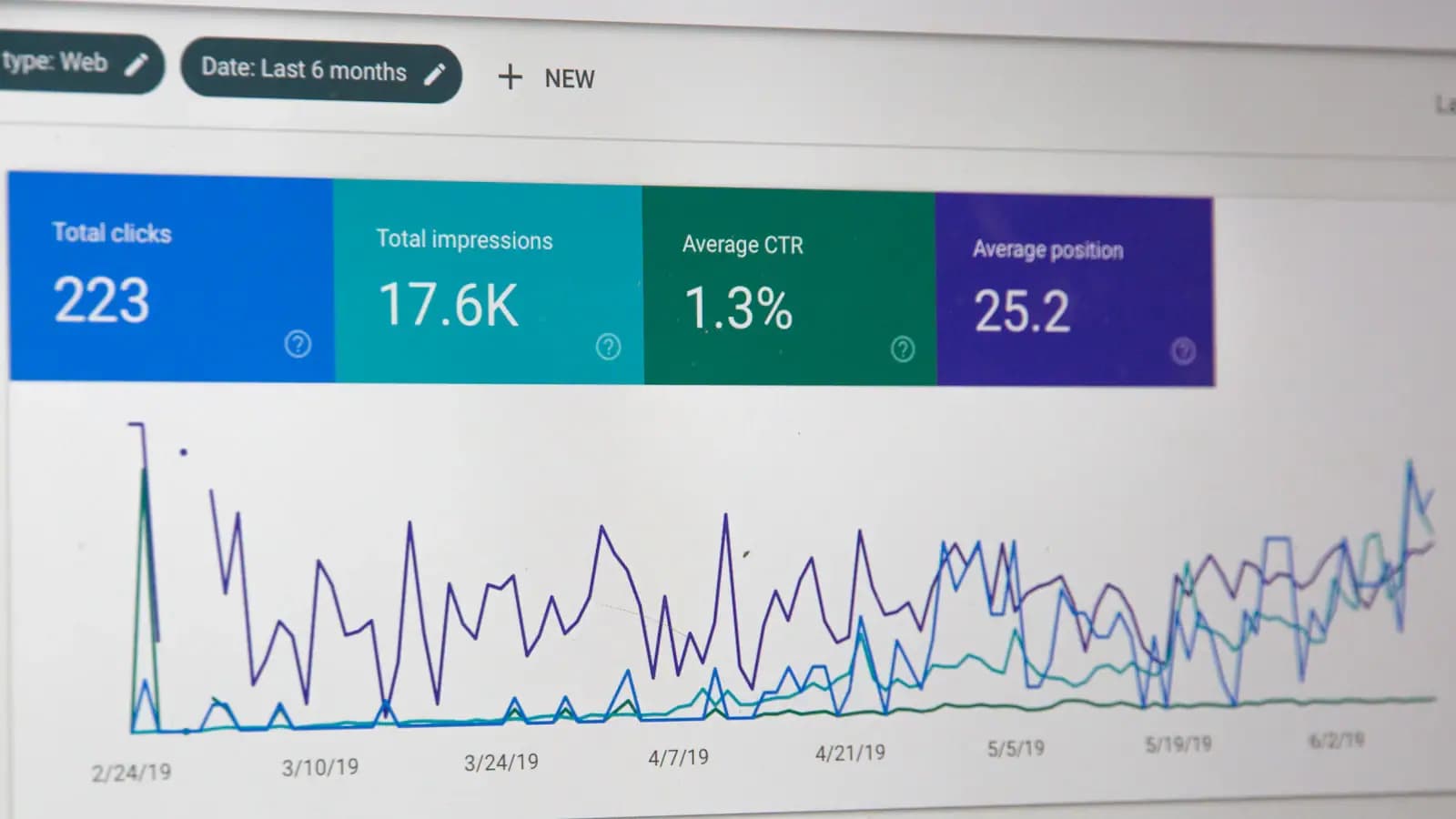
A serious SEO company starts with a technical audit and a current-state report before promising any ranking.

Digital Marketing Company in Saudi Arabia
A serious digital marketing agency installs measurement before spending anything. An agency that starts campaigns and reports clicks and impressions without tying…

E-Commerce Development Saudi
An online store in Saudi Arabia has three non-negotiable requirements: Mada support, e-invoicing compliant with the Fatoora system, and full Arabic RTL.

UI/UX Design Company in Saudi Arabia
A serious UI/UX company delivers a design system and buildable files, not attractive screenshots.

Software Development Cost in Saudi Arabia
Software cost follows integration count and business logic complexity, not screen count. A ten-screen system connecting to e-invoicing, inventory and payment costs…

POS System Development
A POS is judged by entry speed at peak and by whether it works offline. A purely cloud system that stops when the network drops stops sales, which no real point of…