React.js Development in Egypt: Why Choose It?
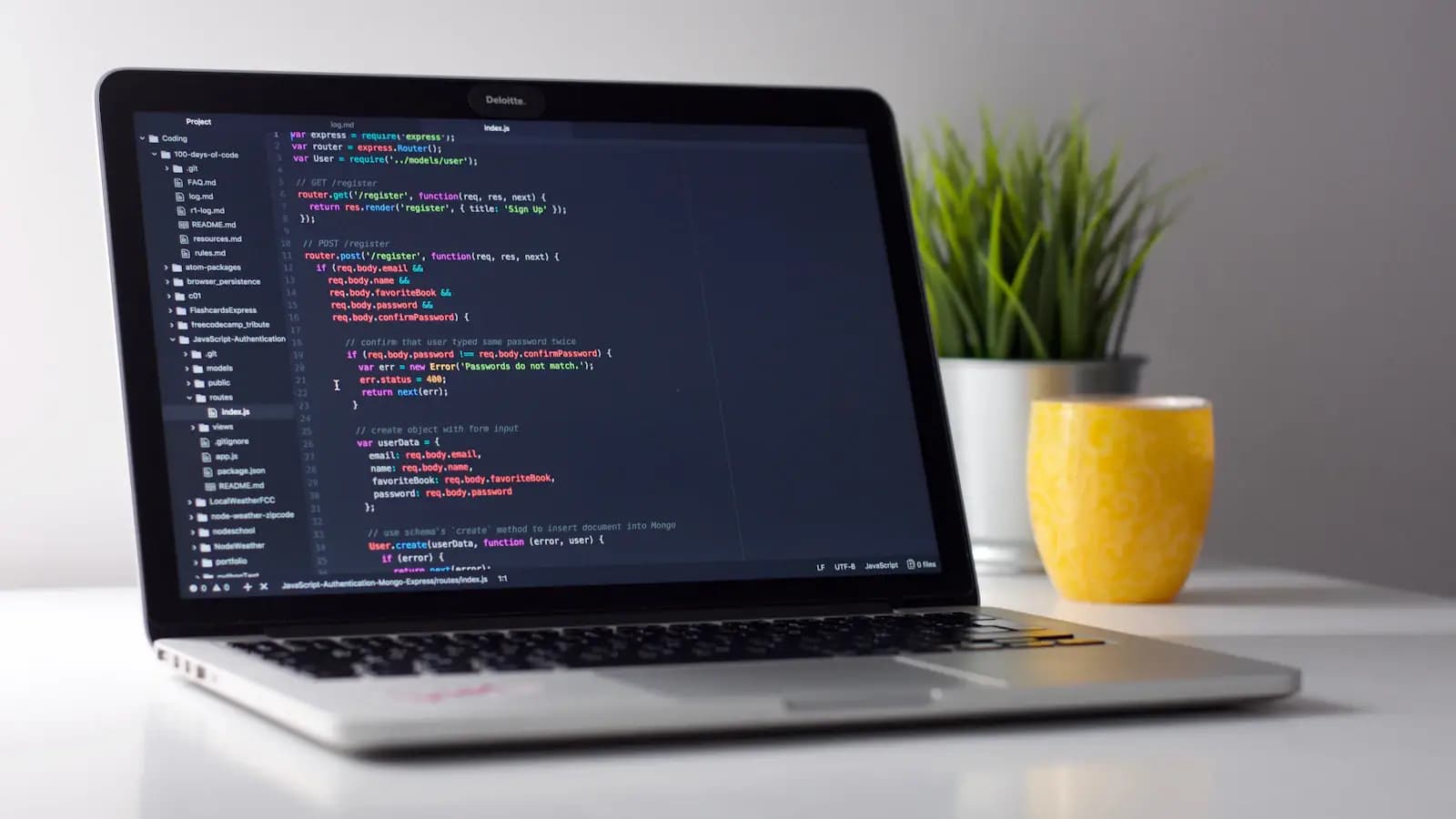
React.js Development in Egypt: Why Choose It?
React is widespread in the Egyptian market with a large developer base, which makes replacing a developer or growing a team easier than with less common…
In short: React is widespread in the Egyptian market with a large developer base, which makes replacing a developer or growing a team easier than with less common technologies. That practical consideration matters as much as the technical ones on a long-lived project.
What is React.js Development?
React is a user interface library used to build interactive applications and dashboards. In Egypt specifically it has a large developer pool, which reduces the risk of depending on one person.
Why React.js Development is worth the investment in Egypt
- First impressions form in seconds: Visitors decide whether to stay in under five seconds; a slow or non-responsive site loses them before they read your offer.
- Search visibility starts with structure: Clean HTML and good load speed are preconditions for ranking, and no amount of content compensates for their absence.
- Mobile is the primary source of traffic: Most web traffic in Arabic-speaking markets arrives from a phone, so design starts at the small screen and expands upward.
- The site is an asset you own: Unlike a social platform page, it is not subject to an algorithm change or an account suspension.
Who needs React.js Development?
- Companies building platforms or interactive dashboards
- Companies wanting technology with locally available developers
- Teams building a long-lived product that will need to grow
Core capabilities
- A large local developer base: Easier hiring and replacement, which reduces the risk of a project stalling when a developer leaves.
- Components built once: Building an internal component library used across the product's screens, keeping appearance consistent and development fast.
- Server rendering where needed: Using Next.js for pages needing search visibility and React alone for dashboards behind a login.
Technologies and tools
These are the tools we actually use on React.js Development projects. Which ones apply depends on the size and budget of the project, not on what is newest:
- React
- Next.js
- Vue
- Node.js
- Laravel
- WordPress
- Tailwind CSS
- Cloudflare
- Vercel
Cost and timeline in Egypt
| Tier | Scope | Indicative cost (EGP) | Duration |
|---|---|---|---|
| Starter | Limited scope, core functionality | 25,000 - 70,000 | from 3 weeks |
| Standard | Full scope with integrations | 70,000 - 200,000 | 3-12 weeks |
| Advanced | Enterprise scope, complex integrations | 200,000+ | 12+ weeks |
These are indicative 2026 ranges for the Egypt market, not a quotation. Actual cost is set after a scoping session, and the largest driver is usually the number of external integrations rather than the number of screens.
How a React.js Development project runs
1. Goals and sitemap
Define exactly what a visitor should do, then draw the page tree and navigation paths around that.
2. Wireframes, then visual design
Grey-box wireframes first to agree structure and content, then the final visual design.
3. Build and responsiveness
Turning the design into code that works at a minimum of three screen sizes, with right-to-left layout accounted for.
4. Content and on-page SEO
Titles, descriptions and structured data written, and permalinks settled before launch rather than after.
5. Testing and launch
Cross-browser and cross-device testing, load-speed measurement, then launch with analytics and sitemaps enabled.
Best practices
- Fix Core Web Vitals before launch: LCP, CLS and INP affect both ranking and bounce rate; address them while building, not months later.
- Use modern image formats: Serving WebP or AVIF at multiple sizes typically cuts page weight to a third.
- Write semantic HTML: Correct headings and landmarks serve screen readers and search engines at the same time.
- Settle permalinks once: Changing URL structure after indexing requires 301s and costs you part of your accumulated link equity.
- Test both directions: Arabic RTL is not an automatic mirror; check icons, tables and forms in both directions.
Common mistakes to avoid
- Designing desktop-first: It produces a cramped, broken mobile experience — the experience most of your visitors actually get.
- Huge uncompressed images: The single most common cause of slow sites in the region; one 4 MB image cancels out every other optimisation.
- Ignoring 404s and redirects: A redesign drops old indexed URLs; prepare a redirect map before migrating.
- Building without a content plan: Beautiful templates filled with placeholder text become an empty site at launch.
- Skipping basic security: SSL, platform updates and form spam protection are not optional extras.
What is specific to Egypt
The Egyptian market combines a large population with a deep developer base, which keeps delivery cost relatively lower than the Gulf at comparable technical quality. Against that, exchange rate volatility makes pricing in local currency and contracting in shorter phases safer for both sides.
- Cash on delivery remains the most used option in e-commerce and must be supported with clear cash handling in the system.
- Addressing is irregular in many areas, so relying on coordinates and nearby landmarks matters more than the text address field in any delivery system.
- Exchange rate volatility makes pricing in pounds and contracting in short phases safer for both sides than long fixed-price contracts.
- The local developer base is broad, which keeps delivery cost relatively lower but demands finer discrimination between providers given the quality spread.
Frequently asked questions
Q: Are React developers easy to find in Egypt?
A: Yes; it is among the most widespread specialisms in the Egyptian market. That lowers hiring cost and the risk of depending on a single developer — an important practical consideration on long projects.
Q: React or Vue?
A: Both solve the same problem at comparable quality. React is more widespread with more libraries; Vue is simpler to learn. The practical decision in the Egyptian market leans to React for developer availability.
Q: Is React suitable for online stores?
A: With Next.js yes, because server rendering solves the SEO problem. React alone does not suit stores that depend on search visibility, since its content is built in the browser.
Q: Do you host the project or do I?
A: Either. We usually recommend cloud hosting in the client company's name, managed under the maintenance contract, so ownership stays with you and operation with us.
Q: How do you ensure system security?
A: Encryption of sensitive data, role-based permissions, regular security updates, and tested backups. Security is part of the design rather than a phase added before launch.
Q: Can I start with a small scope and expand?
A: Yes, and we usually recommend it. Release the module that solves the biggest operational pain, use it in earnest, then build the rest informed by what real usage taught you.
Conclusion
React.js Development is less a purely technical decision than an operational one: the difference between a project that lands and one that stalls usually shows up in how clearly the scope was defined before starting, not in the choice of technology. Begin by stating precisely which problem you are solving, then ask any prospective partner how they intend to measure success.
Codlex Tech is a software development company working since 2020 with clients across Saudi Arabia, Egypt and the Middle East on websites, mobile apps, e-commerce, ERP and CRM systems.
Contact: [info.codlextech@gmail.com](mailto:info.codlextech@gmail.com) — [+201223280094](tel:+201223280094) — [codlextech.com](https://www.codlextech.com)
Latest Articles
Web Development Company in Saudi Arabia: How to Choose the Best
A web development company is judged by what it hands over after launch: source code, deployment documentation, and whether another developer could continue the work.

Node.js Development in Saudi Arabia
Node.js suits applications handling many concurrent, lightly processed requests: APIs, real-time messaging, and data streaming.
React Development in Saudi Arabia
React suits complex interactive interfaces whose state changes frequently: dashboards, web applications and platforms.
PHP and Laravel Development in Saudi Arabia
Laravel is a practical choice for administrative systems and dashboards needing fast delivery on a reasonable budget.

Website Maintenance in Saudi Arabia
A site without maintenance becomes a security liability within months: outdated plugins, untested backups, and expired certificates.

Domain and Hosting Services in Saudi Arabia
The most expensive hosting mistake is registering the domain in the vendor's name rather than the company's.

Web Development Company in Egypt: Professional & Affordable
Web development costs noticeably less in Egypt than in the Gulf at comparable technical quality, which has made the market crowded with offers of varying standard.

Website Design Prices in Egypt 2026
Website pricing follows the number of external integrations, not the page count. A five-page site connecting to a payment gateway, accounting and shipping costs far…

WordPress Development in Egypt: Complete Solutions
WordPress powers a large share of the web because it is fast and cheap to start, but its real cost appears in maintenance: every plugin adds attack surface, and a…
Corporate Website Design in Egypt: Professional Digital Identity
A corporate website is judged by whether it answers three questions within seconds: what do you offer, to whom, and how do I get in touch.

Responsive Web Design in Egypt: A Must-Have
Most website visits in Egypt come from mobile, which makes responsive design the primary design rather than an addition.

Website Maintenance Services in Egypt: Plans & Support
A site without maintenance keeps working for months, then fails all at once: an exploited vulnerability, or a failure with no valid backup.